Introduction: Why Finding Calm Feels So Hard
Stress and anxiety aren’t abstract concepts. They are the result of deep physiological alarms that, over time, can wear down your health. In our modern, high-speed world, it often feels like we’re stuck in a state of perpetual alertness.
The good news is that this chronic state of tension isn’t a permanent condition. It’s an imbalance in your nervous system that you have the power to influence. The key is shifting from reaction to intentional action.
This guide shares practical, evidence-based strategies—the best natural ways to reduce stress and anxiety—that work with your body’s biology, not against it. We’ll explore simple, yet powerful tools drawn from decades of research in wellness and psychology. You’ll gain a clear roadmap for managing your stress response, building mental resilience, and restoring your baseline calm.
1. The Science of Calm: Hacking Your Inner Alarm System
To effectively manage anxiety, you need to understand the control panel inside your body. Chronic stress happens when your body fails to turn off its ancient survival mechanism.
The HPA Axis: The Constant Overdrive
The core of your stress response is a feedback loop called the HPA axis (Hypothalamic-Pituitary-Adrenal). When you perceive a threat—whether it’s a sudden loud noise or an overwhelming email inbox—your brain’s alarm center signals your adrenals to pump out cortisol, the primary stress hormone.
In a crisis, cortisol is vital. In modern life, however, this alarm is often stuck on. This leaves your system constantly primed for battle, leading to the physical and emotional symptoms we call anxiety.
Your Nervous System’s Two Modes
The physical feeling of anxiety is controlled by the two branches of your Autonomic Nervous System (ANS):
- Sympathetic Nervous System (SNS): This is your “Fight or Flight” mode. It ramps up your heart rate, tenses your muscles, and increases adrenaline.
- Parasympathetic Nervous System (PNS): This is your “Rest and Digest” mode. It slows everything down, promotes healing, and returns you to a state of calm.
Chronic anxiety is an SNS takeover. Our goal is to intentionally engage the PNS.
The Vagus Nerve: Your Personal Calming Wire
Think of the Vagus Nerve as the longest highway connecting your brain to your main organs (heart, lungs, gut). It’s the direct line for your “Rest and Digest” system.
When you deliberately stimulate this nerve, you’re sending a signal to your brain that says, “It’s safe to relax.” Strengthening the Vagus Nerve, which we call improving Vagal Tone, means your body recovers quickly from stress. This is key to finding natural ways to reduce stress and anxiety.
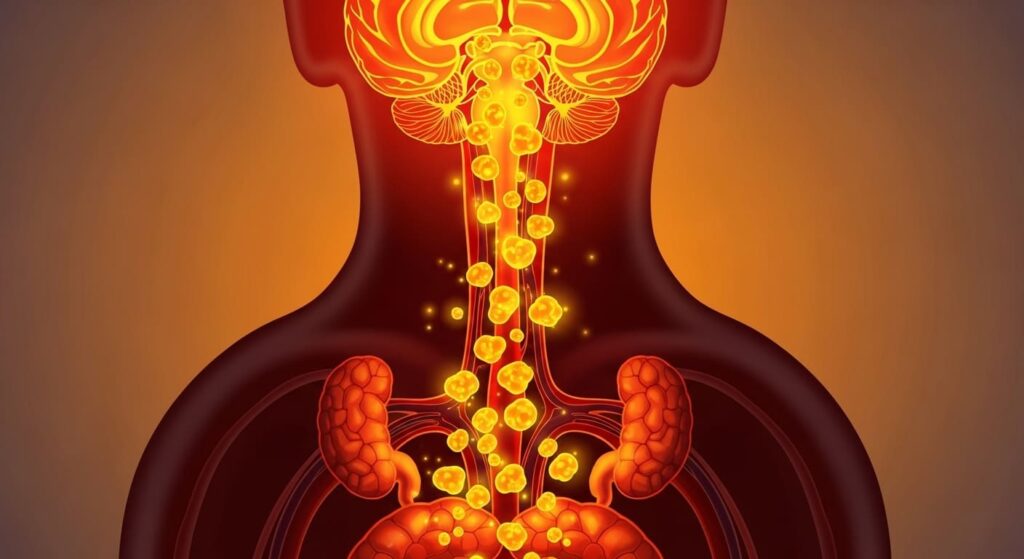
Alt text: Visualizing the HPA axis dysfunction, a key biological driver of chronic stress and anxiety, and understanding natural ways to reduce stress and anxiety.
Key Takeaways: Stress is a biological imbalance driven by the HPA axis. The most effective strategies focus on boosting your Parasympathetic Nervous System through the Vagus Nerve to counter excess cortisol.
2. Immediate Relief: Breathing and Movement Techniques
Your breath is the only part of your Autonomic Nervous System you can consciously control. This gives you an incredibly powerful, free, and immediate tool to shift your state.
Breathing to Hit the Reset Button
By controlling your breath, you send direct signals of safety to your brain.
The key to calming the “Fight or Flight” response is lengthening the exhale. When you breathe out slowly, you gently lower your heart rate. This immediately signals the Vagus Nerve to activate the calming (PNS) response.
The 4-7-8 Breathing Protocol
This technique is effective because it forces that crucial, long exhale:
- Inhale quietly through your nose for a count of 4.
- Hold your breath for a count of 7.
- Exhale completely through your mouth with a gentle whooshing sound for a count of 8.
- Repeat the cycle 4 times.
Practical Application: Use it before a meeting, after a stressful message, or right before bed. It works anywhere, anytime.
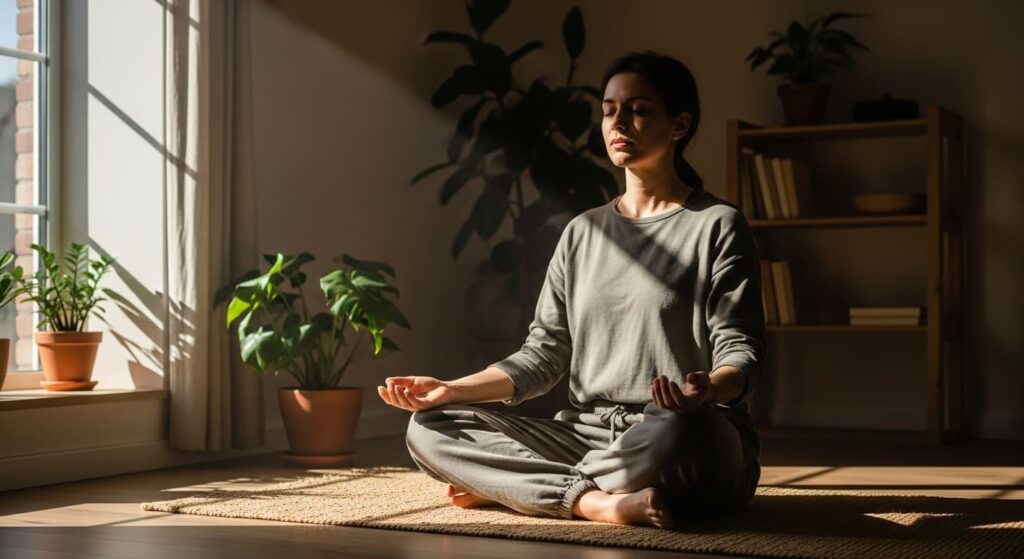
Alt text: The 4-7-8 breathing technique, a simple method to activate the Vagus Nerve and achieve natural stress relief.
Grounding Your Body
When anxiety strikes, it often pulls you into catastrophic future thoughts. Grounding techniques are simple ways to anchor yourself in the present moment, interrupting that spiral.
A simple, effective tool is the 5-4-3-2-1 Method:
- Name 5 things you can see.
- Name 4 things you can feel (the chair beneath you, the air on your skin).
- Name 3 things you can hear.
- Name 2 things you can smell.
- Name 1 thing you can taste.
Moving to Release Tension
Mindful movement is a powerful intervention. It burns off excess adrenaline and reclaims focus from the mind’s internal worry loop.
Research from Harvard shows that mindfulness practices, especially those integrated with gentle movement like Yoga or Tai Chi, can actually help the brain manage emotions better. You don’t need a high-impact workout; even 10 minutes of slow, intentional stretching can change your physiological state.
Key Takeaways: Use the long exhale to directly signal safety to your nervous system. When anxiety flares, use grounding techniques (5-4-3-2-1) to pull your attention back to physical reality.
3. Fueling Calm: Nutrition and Gut Health Strategies
Your brain and nervous system run on fuel. If that fuel is unstable or lacking key components, anxiety becomes much harder to manage. Supporting your metabolic health is one of the most foundational natural ways to reduce stress and anxiety.
The Gut-Brain Connection
Over 90% of your body’s Serotonin—a vital mood-stabilizing chemical—is produced in your gut. This constant communication link (the Gut-Brain Axis) is heavily influenced by the health of your digestive system. A troubled gut often leads to a troubled brain.
To support this axis:
- Eat Fermented Foods: Include foods like kefir, yogurt with live cultures, and sauerkraut. These supply beneficial bacteria.
- Feed the Microbes: Consume plenty of prebiotic fiber from foods like garlic, onions, bananas, and asparagus.
Avoid the Blood Sugar Rollercoaster
Unstable blood sugar is a powerful physical stressor. When your glucose levels crash rapidly, your body reads this as an emergency.
To compensate, your adrenal glands release a flood of cortisol and adrenaline. This hormonal rush feels exactly like an anxiety attack: shaky, racing heart, and nervous energy.
The Fix: Always pair carbohydrates with protein and healthy fats. This slows glucose absorption, providing steady fuel and preventing the hormonal stress response. According to the Mayo Clinic, stabilizing blood sugar through diet is a core strategy for managing mood.
Key Nutrients for a Calm Brain
Your nervous system needs specific micronutrients to synthesize calming chemicals like GABA (your brain’s primary brake) and Serotonin.
- Magnesium: Often called “nature’s tranquilizer,” Magnesium helps relax neurons and is essential for GABA function. Find it in dark leafy greens, almonds, and pumpkin seeds.
- B Vitamins: Folate and B12 are critical cofactors needed to build Dopamine and Serotonin.
- Omega-3 Fatty Acids (EPA/DHA): These healthy fats reduce brain inflammation and support fluid communication between neurons.
- L-Theanine: Found primarily in green tea, this amino acid promotes a relaxed, yet focused state by increasing Alpha brain wave activity.
Disclaimer: These nutrients support general health, but always consult a professional before changing supplements.

Key Takeaways: Stabilize your blood sugar by balancing carbs, protein, and fat. Prioritize Magnesium and Omega-3s daily to directly support the production of calming neurotransmitters.
4. Mindset and Behavioral Strategies for Resilience
While biology sets the stage, how you interpret and react to events determines the intensity of your anxiety. Using behavioral tools helps you regain control of your inner narrative.

Challenging Your Thoughts
Anxiety often thrives on automatic negative thoughts—unquestioned assumptions that catastrophize events. You can use simple questioning techniques, drawn from Cognitive Behavioral Therapy (CBT) principles, to break this cycle.
When an anxious thought surfaces (e.g., “I’m going to ruin everything”):
- Ask: Is this a fact or an opinion?
- Ask: What is the objective evidence supporting this thought?
- Ask: What is a more realistic, balanced thought I could choose instead?
This process engages your rational mind, allowing it to override the panic signals from the emotional part of your brain.
Reclaiming Your Sleep
Sleep isn’t a luxury; it’s when your brain and body repair. Sleep deprivation severely disrupts the HPA axis, raising baseline cortisol levels and making you hyper-reactive the next day.
Protocol for Restful Sleep:
- Respect the Rhythm: Go to bed and wake up at the same time every day, even on weekends.
- Kill the Blue Light: Avoid screens (phones, tablets, TV) for at least one hour before sleep. Blue light suppresses melatonin, the hormone that signals sleep.
- Manage Cortisol: Use the 4-7-8 breathing technique before bed to signal your brain to power down the HPA axis.
Consistent, high-quality sleep helps reinforce the healthy circadian rhythm for cortisol release.
The Power of Connection
Social isolation is a significant psychological stressor. We are wired for connection.
Positive social interaction releases Oxytocin, often called the “cuddle hormone.” Oxytocin is a direct antagonist to cortisol; it is chemically soothing. Making time for meaningful interactions with friends or family is a fundamental, science-backed way to lower stress.
Setting Better Boundaries
Feeling overwhelmed is a major driver of anxiety. Often, this is a result of poor boundaries and the inability to say “no.” Every time you say “yes” to an obligation that depletes you, you are saying “no” to your own calm.
Practical Tip: Protect your time and mental space. Start by declining requests that you genuinely don’t have the capacity for, recognizing that protecting your peace is a non-negotiable step toward reducing anxiety.
Key Takeaways: Challenge your catastrophic thoughts to prevent them from taking emotional control. Prioritize consistent sleep to stabilize the HPA axis. Use social connection to harness the calming power of Oxytocin.
5. Recognizing the Limits: When to Seek Professional Support
The natural ways to reduce stress and anxiety discussed here are highly effective for managing everyday stress and mild to moderate anxiety. However, it’s vital to recognize when your symptoms require professional clinical intervention.
Your well-being is paramount, and there is strength in seeking support.
Warning Signs that Require Professional Help
If you experience any of the following, please reach out to a licensed professional:
- Functional Impairment: Anxiety that consistently interferes with your job, relationships, or ability to manage daily tasks.
- Avoidance: Regularly avoiding places, people, or activities (like public speaking or driving) due to intense fear.
- Physical Distress: Persistent discomfort or repeated symptoms that haven’t yet been evaluated by a professional (like chronic digestive issues or heart palpitations).
- Substance Reliance: Using alcohol, drugs, or excessive food to cope with your mood or anxiety.
- Thoughts of Self-Harm: Any thought of hopelessness or self-harm requires immediate, urgent help from a crisis hotline or emergency services.
Monitoring Your Progress
Since anxiety is subjective, using objective tracking methods can help confirm that your protocols are working.
- Heart Rate Variability (HRV): Tracked via wearable devices, a higher HRV indicates a stronger, more flexible nervous system (better Vagal Tone) and greater resilience to stress.
- Sleep Quality: Use a tracker or journal to note the consistency of your sleep (time in deep/REM sleep).
- Self-Assessment: Use a standardized tool like the Generalized Anxiety Disorder (GAD-7) scale to track your weekly score reduction.
According to the National Institute of Mental Health (NIH), incorporating objective tracking methods can significantly enhance the effectiveness of mental health management strategies.

6. Final Thoughts: Building a More Resilient Nervous System
Mastering natural ways to reduce stress and anxiety is not about achieving perfection; it’s about cultivating resilience. You are learning to stabilize your inner environment, giving your nervous system the support it needs to process the inevitable challenges of life.
The most effective tools—deep breathing, metabolic stability through diet, and intentional connection—are accessible to you every day. They are the foundation of a nervous system that can handle pressure and quickly return to peace.
Final Call to Action (CTA)
Take action to reset your nervous system today: Choose one simple habit—the 4-7-8 Breathing Technique—and commit to practicing it for four cycles, twice a day, every day for the next 7 days. This small, consistent commitment is the most direct path to activating your “Rest and Digest” mode and starting your journey toward a calmer life.
Safety Reminder: Remember that natural methods are the foundation of wellness, but they are always complementary to, and never a replacement for, clinical care when dealing with severe mental health issues.
Leave a Reply