

Introduction: The Foundation of a Lifetime
How to increase bone density naturally is a vital strategy for long-term health and maintaining independence. Strong bones are not just about structure; they’re key to active aging and osteoporosis prevention.
After years studying how nutrition and exercise affect bone strength, one thing is clear: your bones are highly responsive to the right signals. They are living, adaptable tissues that constantly rebuild themselves.
As we age, this renewal process often slows down, leading to bone loss and lower bone mineral density (BMD). This guide will provide proven, non-pharmaceutical strategies—the best natural bone density boosters—to help you reinforce your frame.
You will learn the evidence-based methods across diet, movement, and lifestyle to help you improve bone health and achieve stronger bones for life.
Understanding Bone Strength: Building Up vs. Breaking Down
Understanding how to increase bone density naturally begins with knowing your bone biology. Your skeleton is not a fixed structure; it’s a constant construction zone.
The Bone Renewal Cycle: How to Build Stronger Bones
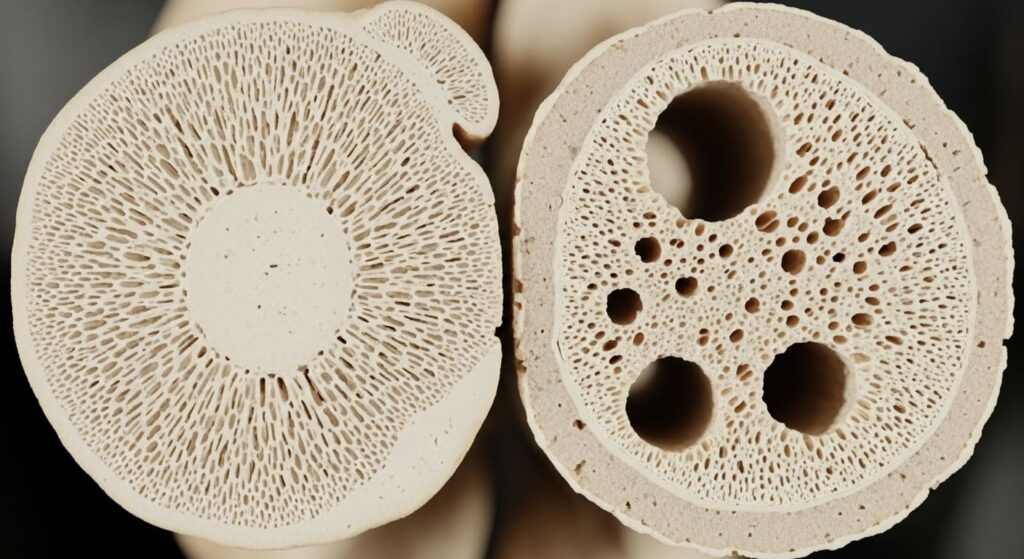
Bone tissue constantly undergoes remodeling—a balanced process of breakdown and buildup. To successfully build stronger bones, you need to tip this balance toward formation.
- Cleanup Crew (Osteoclasts): These cells remove old, microscopic bone damage.
- Construction Crew (Osteoblasts): These cells lay down new, mineral-rich bone tissue.
To increase your BMD, we need the Osteoblasts to work faster and more effectively than the Osteoclasts. The strongest signals we can send to activate the builders are specific types of exercise and nutrient intake.
The Mechanical Principle: Why Bones Respond to Stress
The primary rule governing bone strength is called Wolff’s Law. It states that bone adapts and grows stronger in response to the stress placed upon it.
When you subject your bones to sufficient load (like lifting weights), internal cells sense this force. They then signal the Osteoblasts to reinforce the structure by depositing more minerals.
This is why a sedentary lifestyle causes bone weakening, while targeted movement is crucial for anyone looking to increase bone strength and reverse bone loss.
Pillar 1: Best Foods for Bone Strength and Mineral Intake
Nutrition supplies the essential raw materials. Without the right dietary support, your bone-building cells cannot create high-quality, dense tissue.
The Essential Duo: Calcium and Vitamin D for Bone Density
These two nutrients are the foundation of effective natural bone density boosters. They work synergistically and are non-negotiable for skeletal health.
Calcium: The Core Mineral
Calcium is the main structural component of your bones. Most adults should aim for 1,000–1,200 mg of calcium daily.
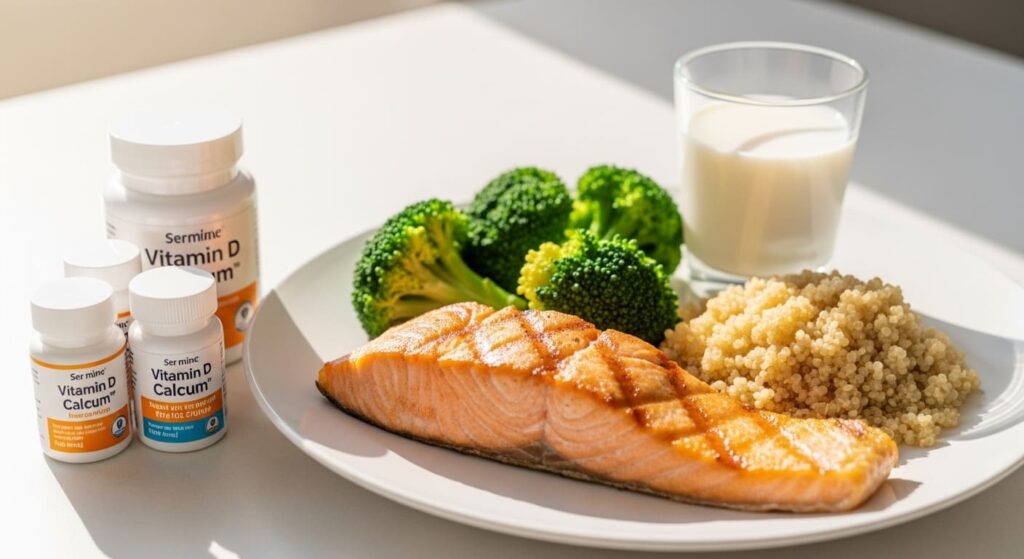
- Beyond Dairy: Excellent sources include dark leafy greens (like kale and collards), fortified plant milks (almond or soy), tofu set with calcium sulfate, and canned fish with soft bones (like sardines).
- Tip: If you need 1,200 mg but only get 600 mg from food, only supplement the remaining 600 mg.
Vitamin D: The Absorption Key
Vitamin D acts like a key, allowing your body to effectively absorb the calcium you consume. Without sufficient Vitamin D, much of your dietary calcium is wasted.
- Optimal Levels: Many people need a daily intake between 800 IU and 2,000 IU to maintain optimal blood levels (above 30 ng/mL.
- Sources: Sunlight exposure is natural, but supplements, fatty fish, and fortified foods are often necessary, especially during low-sun months.
Supporting Nutrients to Improve Bone Health
A strategy for how to increase bone density naturally requires a diverse nutrient profile:
- Magnesium: This mineral is associated with converting Vitamin D into its active form and supports the function of bone-building cells. Sources: Nuts, seeds, and whole grains.
- Vitamin K2: This vitamin is thought to help guide calcium directly to the bone structure, preventing its inappropriate buildup elsewhere. Sources: Fermented foods and certain cheeses.
- Protein: Bone’s structural matrix is largely made of collagen (protein). Adequate protein intake is vital for the framework that minerals attach to. Aim for healthy protein sources like lean meats, legumes, and eggs.

Pillar 2: Exercises to Improve Bone Density
Exercise is the most potent non-pharmaceutical stimulus to increase bone density naturally. When you challenge your bones, they adapt by getting stronger.
H2. Targeted Movements: Load, Impact, and Bone Strength
To effectively build stronger bones, you need activities that create mechanical stress (loading) on the skeleton, not just low-impact movement.
1. Resistance Training (Pulling Force)
This type of exercise involves your muscles pulling against a resistance, which stimulates bone formation directly at the muscle attachment points.
- Actionable Tip: Focus on compound movements—exercises using multiple large joints and muscle groups.
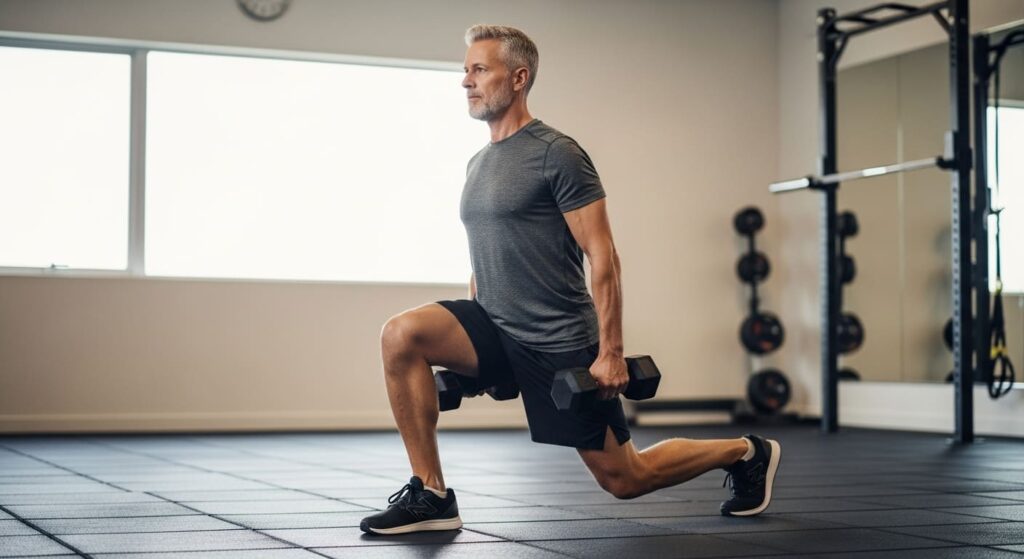
- Examples: Squats, lunges, deadlifts (or hip hinges), and overhead presses.
- Intensity: To drive bone growth, you need to lift challenging weights—something you can manage for 8–12 repetitions before feeling fatigued.
2. Weight-Bearing and Impact Activities (Compression Force)
These movements deliver forces that travel up from the ground through your skeleton, which is crucial for stimulating the hips and spine—common sites for bone loss.
- Examples: Brisk walking, climbing stairs, hiking, or controlled hopping/jumping.
- Protocol: Even short bursts, like 10–20 controlled hops a few times a day (if safe for your joints), can significantly contribute to increasing bone strength.
Important Safety Note: If you have known low bone density (osteopenia or osteoporosis), avoid any activities involving high impact or spinal bending (e.g., full crunches or toe touches). Always confirm your safe exercise plan with a professional.
Sample Weekly Routine for Maximizing Bone Strength
An effective routine combines both types of stress:
- 2–3x per week: Resistance Training (lifting weights for major muscle groups).
- 4–5x per week: Weight-Bearing Cardio (e.g., a brisk 30-minute walk or hike).
- Daily: Balance Work (e.g., standing on one leg) to reduce the risk of falling, which indirectly protects your existing bone mass.
Pillar 3: Lifestyle Habits for Osteoporosis Prevention
Certain lifestyle habits can either silently accelerate bone loss or powerfully support your efforts to increase bone density naturally. Addressing these factors is essential.
Promoting Healthy Bones Through Daily Habits
Minimizing bone-deteriorating factors while maintaining hormone balance is key.
- Stress and Cortisol: Chronic high stress leads to elevated cortisol, a hormone associated with increased bone breakdown. Prioritizing stress-reducing activities (like deep sleep, meditation, or hobbies) helps protect your bone-building efforts.
- Smoking Cessation: Smoking impairs blood flow to bones and hinders calcium absorption. Quitting is one of the most impactful decisions you can make to halt accelerated bone loss.
- Moderate Alcohol Intake: Excessive alcohol disrupts Vitamin D metabolism and increases the risk of falls. Limiting intake supports healthy bone maintenance.
The Critical Role of Fall Prevention
The best way to protect your bones is simply to prevent them from breaking. Fall prevention is a vital part of osteoporosis prevention.
- Home Safety: Clear clutter, secure loose rugs, and ensure adequate lighting, especially on stairs.
- Balance Training: Regularly practice exercises like Tai Chi or simple single-leg stands. This improves stability and reaction time, drastically reducing fall risk.

Supplementation Strategy: Filling Nutritional Gaps
The goal of supplements is to augment a healthy diet, not replace it. Use them strategically to help increase bone density naturally.
Smart Supplementation for Natural Bone Density Boosters
| Supplement | Expert-Based Strategy | Why It Helps Build Stronger Bones |
| Calcium | Calculate your dietary intake first; only supplement the deficit. Never take more than 500 mg in a single dose. | Provides the core mineral foundation. |
| Vitamin D | Get your levels tested. Supplementation is often necessary to reach optimal ranges (above 30 ng/mL. | Essential for efficient calcium absorption from the gut. |
| Magnesium | May be beneficial if diet is poor in nuts and greens, as magnesium supports the function of Vitamin D. | Supports overall bone metabolism and mineral balance. |
Safety Reminder: High doses of supplemental calcium (over 1,500 mg total daily) are associated with potential health risks, including kidney stones. Always use supplements cautiously and preferably under the guidance of a health professional.
Monitoring Progress and Setting Realistic Goals
Knowing how to increase bone density naturally requires measuring the impact of your efforts over time.
The DEXA Scan: Tracking Bone Density Improvement
The DEXA (Dual-energy X-ray Absorptiometry) scan is the most precise tool for measuring your BMD. It gives you a T-Score, which compares your density to that of a healthy young adult.
- T-Score ≥ -1.0 Normal bone density.
- T-Score between –1.0 and –2.5: Osteopenia (low bone mass). This is your signal to maximize your efforts to increase bone strength.
- T-Score ≤ –2.5: Osteoporosis.
Setting Realistic Expectations for Long-Term Results
Building stronger bones is a gradual, long-term commitment.
- Patience is Key: Don’t expect dramatic gains quickly. Practical experience and research suggest that even a 1–3% increase in BMD per year is considered an excellent, hard-earned result, especially in older adults.
- Consistency: The true success lies in the consistent application of resistance exercise and proper nutrition over many years.

Simple FAQs on How to Increase Bone Density Naturally
Common Questions About Building Stronger Bones
1. Can I reverse significant bone loss naturally after age 65?
Yes, you can slow bone loss, stabilize your density, and often achieve modest increases. The bone remains responsive to high-load resistance training and optimal nutrient intake, making it a powerful strategy for osteoporosis prevention.
2. Do I need to run or jump to see results?
High-impact exercise is very effective, but it’s not essential. If your joints prevent running, focus on safe, heavy resistance training (like heavy squats or presses) combined with brisk walking and stair climbing. Load is more important than speed.
3. How do I get enough calcium if I’m lactose intolerant?
You can easily reach your calcium goal through non-dairy natural bone density boosters. Prioritize fortified soy milk, calcium-set tofu, broccoli, and calcium supplements (if needed).
4. Are there any stretches that are bad for my bones?
Yes. If you have low BMD, avoid deep, forced stretches that involve spinal flexion (bending forward severely) or twisting, as these motions can be associated with an increased risk of compression fractures. Focus on gentle balance and posture work.
Conclusion: Empower Your Skeletal Future
Your journey to figure out how to increase bone density naturally is a long-term project built on consistency and knowledge. Strong bones are a reflection of the loads you bear and the nutrients you provide.
You have the power to influence your skeletal health profoundly. By committing to adequate nutrition, applying targeted mechanical load through exercise, and managing bone-harming habits, you are constantly signaling your body to build stronger bones.
Your Call to Action: Choose one high-calcium food to add to your diet daily, and commit to one resistance training session this week. Transform this expert knowledge into safe, consistent action.
Leave a Reply